What Is TV Art?
How Turning Your Television Into Art Transforms the Feeling of Your Home
You step into your living room after a long day.
The space is beautiful. Soft light falls across the room. Your sofa is thoughtfully chosen. The coffee table holds a stack of books you love. Everything feels calm and composed.
And then your eyes land on it.
A large, black rectangle staring back from the wall.
The television is necessary. It brings family movie nights, weekend games, and quiet evenings together. But when it is turned off, it often becomes the one element that disrupts an otherwise refined room.
This is exactly why many elegant homes are embracing TV Art.
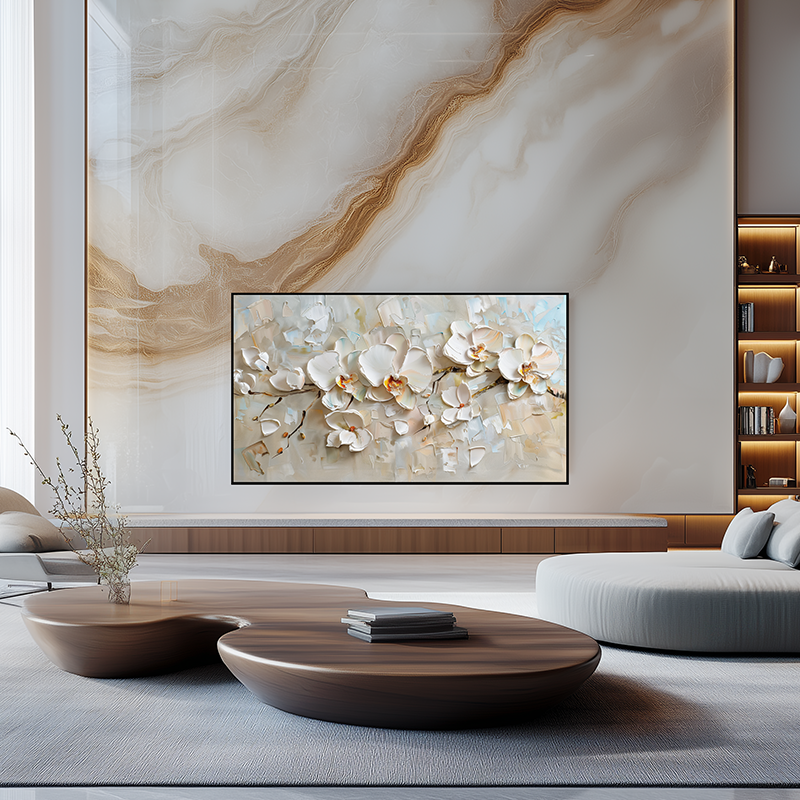
By turning a blank screen into a curated display of artwork, a television becomes something entirely different. Instead of interrupting the design of the room, it becomes part of it.
For women who appreciate thoughtful interiors and quiet luxury, TV Art offers something surprisingly powerful. It allows technology to disappear into beauty.
What Is TV Art?
TV Art refers to digital artwork designed specifically to display on a television screen when the TV is not in use.
Instead of showing a blank screen, your television becomes a rotating gallery of carefully chosen pieces. Landscapes, abstract paintings, botanical illustrations, or minimalist photography can appear on the screen as if they were framed art.
This concept became widely known with the introduction of Frame TV Art, particularly through televisions designed to display artwork in a frame-like format. One of the most recognizable examples is the Samsung Frame TV Art feature, which allows homeowners to display curated digital art collections directly on their television.
But TV Art is not limited to one device.
Many modern televisions can display digital art for TV through apps, screensavers, USB uploads, or smart display modes. Once the art is installed, the television quietly transforms into a visual focal point rather than a technological intrusion.
In essence, TV Art turns a piece of technology into something more personal. Something curated.
Something beautiful.
Why Black TVs Disrupt Beautiful Homes
Interior designers have quietly acknowledged this problem for years.
Televisions are often the most visually dominant object in a room.
Large black screens absorb light. They create contrast against walls. They interrupt the natural flow of color and texture within a space.
Even in carefully styled interiors, a television can unintentionally become the focal point.
For a woman who appreciates refined living, this creates a subtle tension. Her home may feel thoughtfully designed, yet the television still draws attention away from everything else.
There are a few reasons televisions disrupt interiors so easily:
The Color Contrast
A black screen against a light wall immediately pulls the eye. It creates a visual interruption in a space meant to feel harmonious.
The Scale
Televisions are often among the largest objects in the room. When they are turned off, they appear as a large empty void on the wall.
The Emotional Effect
Beautiful interiors create warmth and atmosphere. A blank television screen can feel cold by comparison.
This is why homeowners have historically tried to hide televisions behind cabinets, sliding panels, or decorative frames.
TV Art offers a far more elegant solution.
Instead of hiding the television, it allows the screen to participate in the design of the room.
How TV Art Changes the Atmosphere of a Room
When a television displays art instead of darkness, the emotional tone of a room shifts almost immediately.
The difference is subtle but powerful.
Rather than seeing a piece of technology, the eye sees an image. Color. Texture. Movement. Something that contributes to the atmosphere of the space.
This transformation works on several levels.
Visual Harmony
Art softens the presence of the screen. Instead of a black rectangle, the wall holds an image that complements the room’s palette and style.
A minimalist abstract piece may echo the colors of the sofa. A landscape photograph may bring calm natural tones into the space.
Suddenly the television no longer interrupts the room. It belongs within it.
Emotional Warmth
Artwork carries emotional weight.
A serene ocean scene introduces calm. A classical painting adds depth and character. A modern abstract composition brings quiet energy.
These visual cues influence how the room feels.
When guests enter the living room, their first impression shifts from technology to design.
A Sense of Intention
Perhaps the most meaningful change is the feeling of intention.
Displaying TV Art decor signals that every detail of the space has been considered. Even the television serves a purpose within the design.
For a woman who values elegance, this quiet intentionality makes a difference. It allows her home to express her taste without saying a word.
Why Elegant Homes Are Adopting Frame TV Art
Interior design trends often begin quietly before becoming widely adopted.
Over the past several years, Frame TV Art has become increasingly popular among homeowners who appreciate refined interiors.
The reason is simple. It solves a design problem that many people have struggled with for decades.
Televisions are no longer temporary intrusions. They are permanent fixtures in modern homes.
Rather than resisting this reality, designers have begun integrating technology into the aesthetic language of the room.
Several design movements have encouraged the adoption of TV Art.
The Rise of Quiet Luxury Interiors
Modern luxury interiors prioritize calm, balance, and intentional simplicity.
Technology that blends into the environment fits naturally within this philosophy.
A television that looks like artwork aligns beautifully with this approach.
Gallery Wall Styling
Many homes now feature gallery walls filled with curated prints, photography, and paintings.
When a television displays artwork, it can become part of this gallery arrangement rather than sitting awkwardly beside it.
The Desire for Personal Expression
Homeowners increasingly want their homes to reflect their identity.
Digital artwork allows a television to display pieces that align with personal taste. Abstract art, classic paintings, botanical studies, or architectural photography can all reflect different styles.
In this way, TV Art for living room spaces becomes another form of interior storytelling.
It quietly communicates the aesthetic values of the homeowner.
How to Choose the Right TV Art for Your Home
Selecting the right digital art for TV is similar to choosing artwork for your walls. The goal is harmony.
A few thoughtful considerations can make the result feel polished and intentional.
Consider the Room’s Color Palette
Choose artwork that echoes the colors already present in the space.
Soft neutrals, warm earth tones, or subtle blues often work beautifully in living rooms because they blend naturally with upholstery and decor.
Match the Style of the Interior
A modern home may benefit from minimalist abstract art.
A traditional interior might feel more cohesive with classical paintings or botanical prints.
The goal is to make the television feel like a framed piece that belongs in the room.
Rotate Artwork Seasonally
One advantage of TV Art is flexibility.
Artwork can change with the seasons. Light landscapes in summer. Warm, textured paintings in autumn. Calm winter scenes during colder months.
This simple rotation can subtly refresh the atmosphere of the home.
Avoid Overly Bright Images
Highly saturated or neon colors can make the television feel like a screen again.
Soft tones and painterly textures help maintain the illusion of framed artwork.
When Technology Becomes Part of Your Interior Design
For years, technology and interior design felt like opposing forces.
One prioritized function. The other focused on beauty.
TV Art represents a shift in how we think about our homes.
Instead of hiding technology, we are learning to integrate it thoughtfully into our environments.
A television that becomes art reflects a broader idea about modern living. Our homes should support the lives we live while still expressing the values we hold.
Comfort. Beauty. Intention.
For a woman who takes pride in her surroundings, this balance matters. Her home is not simply where life happens. It is a reflection of her presence.
Even the smallest details contribute to the feeling of the space.
When a television quietly becomes art, the room feels calmer. More cohesive. More intentional.
Technology fades into the background.
Design takes its place.
A beautiful home is rarely defined by grand gestures.
More often, it is shaped by the thoughtful decisions that happen quietly. The objects chosen with care. The atmosphere created through subtle details.
TV Art is one of those details.
By turning a television into a curated display of artwork, a common piece of technology becomes part of the home’s aesthetic story.
The living room feels warmer. The walls feel more balanced. The space begins to reflect the taste and identity of the woman who designed it.
And that is what refined living has always been about.
Not excess.
But intention.
Because when every detail is considered, a home begins to do something remarkable.
It begins to speak for you.